Season 1, Episode 2
The Human Side of the Web with Jared Smith
WebAIM's director on usability, the state of web accessibility, and what AI can and cannot fix.
Released: November 5, 2026
About this episode
Jared Smith has spent more than 25 years at WebAIM helping organizations make the web work for people with disabilities. He joins Taylor Talbot and Jay Pope, Web Accessibility Specialist & CEO of Pope Tech, for a conversation about where the web stands today and where it needs to go.
They talk about why usability is the foundation of accessibility, what a million home pages reveal about the state of the web, what AI can and cannot do for people with disabilities, and why accessibility is a human experience before it is a technical one.
Show Notes:
- Why usability is the foundation of good accessibility
- How one email to Jared started Jay's work in accessibility
- WebAIM's history, from a 2003 training CD ROM to today
- What the WebAIM Million shows, and why detected errors went up last year
- The six issues behind most detectable accessibility errors
- AI's promise and its limits for people with disabilities
- What Jared would change about the accessibility field
Resources mentioned
- WebAIM
- The WebAIM Million
- WebAIM Screen Reader User Survey and other projects
- WAVE accessibility evaluation tool
- "To Hell with WCAG 2" by Joe Clark
- "The Disability Dongle," the blog post Jared quotes
In this conversation
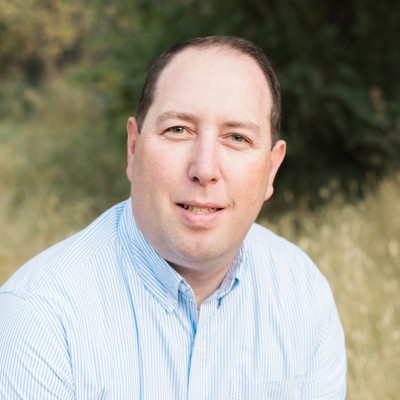
Jared Smith
Guest, Director of WebAIM
Jared Smith is the director of WebAIM, a nonprofit based at Utah State University. He has been with WebAIM for more than 25 years, providing accessibility training, consultation, and research, including the annual WebAIM Million and the Screen Reader User Survey.
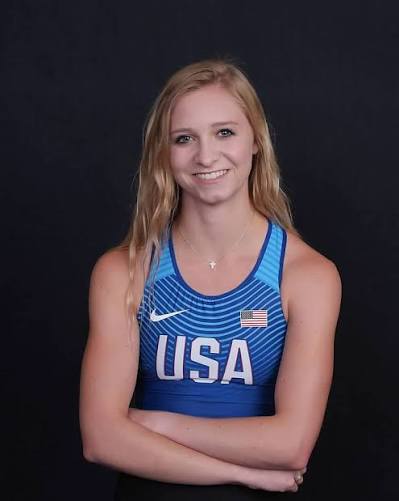
Taylor Talbot
Host, Paralympic triathlete
Taylor Talbot is a Paralympic athlete who has been losing her sight since early childhood. She competed in the 100 and 400 meters at the 2021 Paralympic Games, then switched to Paralympic triathlon, where she has won a World Cup gold medal and raced in the World Championship Series. She trains in Tucson, Arizona.
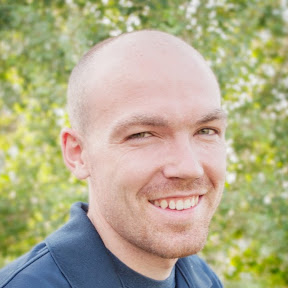
Jay Pope
Co-host, Web Accessibility Specialist & CEO
Jay Pope is a co-founder of Pope Tech. His introduction to web accessibility came from an email to Jared Smith while he was working at Utah State University. Today Pope Tech helps organizations test, track, and manage accessibility at scale.
Full transcript
This transcript has been lightly edited for readability.
Taylor Talbot: Hey everybody, welcome to another episode of Access Forward. I'm here with my cohost Jay Pope, owner and founder of Pope Tech. And we have with us today our first guest, Jared Smith, who is the executive director of WebAIM. Jared, would you like to introduce yourself?
Jared Smith: Sure. Hi, thanks for having me. I'm Jared. I'm the director of WebAIM, which is Web Accessibility In Mind. We're a nonprofit based at Utah State University. I think this week is our 27 year anniversary for WebAIM doing this work. So quite a while, if you consider the history of the web and web accessibility. We're passionate about accessibility. We provide training, consultation, website testing, and some other things we may talk about along the way. But our real goal and mission is to empower organizations to make the web more accessible to people with disabilities.
Jay Pope: Congratulations on 27 years. That's awesome.
Jared Smith: Yeah, it's been an adventure along the way, for sure.
Taylor Talbot: That sounds absolutely amazing. Well, thank you for coming to the show today, Jared. We're so happy to have you. We're going to start kicking off these episodes with a question, and we're hopefully going to ask it pretty often. So I'd like to be the first one to ask you this question. What is something on websites that makes it very difficult for you to navigate, or maybe even frustrates you a little bit? When you're trying to get something accomplished on a website, what stands in opposition to that?
Jared Smith: Well, there's a lot of things on the modern web that can be frustrating. But for me, it really comes down to usability, and just a lack of consideration for the user experience. So much of the web is increasingly not focused on that user experience. The users are kind of the product instead of the consumer anymore, is what it feels like. So things like pop ups and banner ads and cookie banners, videos and animation, things that pull you away from the core content and functionality. I know a lot of that is driven by market reasons and revenue. For me, that's what's really frustrating, especially because I know those things also impact accessibility for those with disabilities. I sometimes use the phrase that web accessibility is lipstick on a usability pig. Usability really is the core foundation of good accessibility. If you focus on usability first, accessibility is so much easier to implement. Very often, a lot of the accessibility issues are addressed when you make things more usable and friendly and efficient for the user first. So it's not really anything specific, but those are the things that really get me when I come to web pages.
Jay Pope: I hate those pop ups, especially on a phone, when it's taking up part of your screen and they make the little X so small that you can't click it, and you end up accidentally clicking an ad or something.
Taylor Talbot: Yeah, that is one of my pet peeves as well. I think you guys hit it right on the head. Jay, do you want to add anything else?
Jay Pope: No. I guess the opposite, though. What's something you really like on a website?
Jared Smith: Boy, for me it's streamlined design, a focus on the core content and functionality, efficiency. Just having a pleasant, efficient user experience without that burden and overhead. That's really important to me. I've spent a lot of time over probably the last decade focusing on readability and legibility, the reading experience and the science behind reading. So for me, when I come to a web page, I love when it's just pleasant to read, where I don't have to think about reading because the text is too small or low contrast, or there are distractions, or the line lengths are a mile long or too short, or the typeface is really difficult to read. We spend so much of our time on the web reading. When I come to a page where I can easily and quickly get the content without that cognitive overhead in the background of trying to read it, that's really powerful and impactful for me. Good reading experiences are pretty powerful.
Taylor Talbot: Thank you, Jared. These are really great insights. So Jay has mentioned to me before that I think you were the one who introduced him to web accessibility. I think he mentioned that someone gave him your email address, and you introduced him to a program called WAVE, if I'm not mistaken. Would you want to tell us a little bit about that?
Jay Pope: Someone gave me Jared's email, and that was my introduction to web accessibility. I emailed Jared and asked him a question when I worked at Utah State University.
Taylor Talbot: Why don't you guys tell us a little bit about that?
Jay Pope: I bet Jared doesn't remember it. How many emails over the years do you think you've answered? If we include the email list you've had for 25 years.
Jared Smith: Lots of emails, for sure. I always love hearing that we're impacting people. We've always tried to be very personable, to maintain that real human approach and have a human on the other end of the phone or the email when you contact us. That's important to us. So, Jay, I don't remember that exactly. We've known each other for a very long time. But I think that is typical of a lot of people. Their introduction to accessibility was maybe an initial contact, a Google search that landed on our website, or somebody referring them to us or to our resources and tools. And it's kind of humbling to think of WebAIM now compared to what it was when it began. We're still a pretty small organization, really, but I feel like we've made an impact, maybe moved the needle a little bit. Sometimes the data suggests it's not moving, but I always have to tell myself, where would we be if we weren't doing this work, and if others who are so passionate about this weren't doing the work? It's also exciting to me to know that there are so many other people out there like Jay and Taylor and you who are advocating for this today. Compared to 1999, when we were starting, it was just a handful of people doing this work and working on the initial set of accessibility guidelines. There was so little awareness of web accessibility at all. We've come a long way, but we still have a lot of work to do.
Jay Pope: I think you've definitely made a lot of impact. That listserv, and just the comments of how many people it helped, and that's just one example. Lots of impact and lots of awareness. And webaim.org is one of my go tos for accessibility resources, and it has been since that introduction.
Jared Smith: It's interesting how the website really became a catalyst for so much of what we do. Focusing on providing free resources and materials and information, sharing openly the research that we conduct, and becoming a repository for good accessibility knowledge. I think it has really led to a lot of the other services we provide. It's helped us support additional research, and it really comes from providing that freely, but also building a community around accessibility and the things we do.
Taylor Talbot: That's such a big inspiration to me and to many other people, when people like you and Jay build something that helps others and creates more accessibility for so many different people with different conditions, whether it's somebody like me who's visually impaired, or anybody. I think everybody appreciates when the world is easier to navigate, and keeping all of that in mind for other people's benefit is super inspiring to me. So thank you for all of your hard work, Jared and Jay. You've really done more than you know to help others, and I just wanted to express my gratitude up front. And then I did want to ask you, you said you've been working there for a long time, 25 years, right?
Jared Smith: Yeah, it's a little over 25 years that I've been with WebAIM.
Taylor Talbot: That's amazing. So what made you want to get involved with web accessibility?
Jared Smith: I kind of stumbled into it a little bit. I was going to grad school, I was doing some web design and web development, ColdFusion, if anybody remembers that. That's what I was doing at the time, and I started working on a project just across the hall from WebAIM, which had started just a year or so before. I found that it really aligned with my interests. I had a teaching degree, and I was planning to get a master's degree and then go back to teaching. But I was also kind of geeky. I loved the tech stuff. I was teaching web development, teaching HTML, and I saw the potential of the web, and I saw that those things aligned really well with the mission of WebAIM: to use technology, but also to teach and train and empower and educate people. I talked them into bringing me on board, and they haven't been able to get rid of me, so it's worked out pretty well.
Jay Pope: That's cool. I started coding in ColdFusion too, but that's because we both went to Utah State University.
Jared Smith: Yeah, it was a bit of a thing here at our university. But in a lot of ways, those foundations in standard HTML and basic CSS really set a good framework for the accessibility knowledge that would come later in my career. Really understanding those foundational basics of how the web works served me well over my career.
Jay Pope: And probably teaching, too. Do you keep track of how many trainings WebAIM has done?
Jared Smith: No, we don't. I'm sure it's well into the hundreds of thousands of people that we've trained, or who've been part of our free annual conference, things like this podcast, webinars, conference presentations. Lots of people.
Jay Pope: Because you still do the in person training in Logan?
Jared Smith: We haven't for a little bit. With the pandemic, we shifted primarily to virtual, and we find that's where most of the demand is. We do go on site and provide training to clients who want us to come to them, but we haven't hosted a training here locally for a little while.
Jay Pope: I was able to go to that three or four times, and I've been to virtual ones.
Taylor Talbot: I'm curious now, because I've never been to one of these trainings. Would you guys please enlighten me? Because I would love to learn.
Jared Smith: Well, first we need to get you to one of our trainings, Taylor.
Taylor Talbot: I would love that.
Jared Smith: Consider that an invitation. You can learn more on our website, webaim.org. We offer two day trainings, we can do shorter workshops, and we do more customized training on specific topics. We have an online document accessibility course for Word, PowerPoint, and PDF accessibility, things like that. We've been doing these trainings for well over 20 years now and have refined them a lot over time to hopefully make them really beneficial. In fact, as I was preparing for this, I was thinking about some of the history of WebAIM and some of the key events. I was thinking back to the training CD ROM that we first created. It was probably 2003. It was a CD based training, and it was really the catalyst for so many of the other trainings we've provided and for the content that's on our website. We spent all this time building a standalone training on CD. No video, just text based. It was such an interesting decision for us. I remember working 20 hour days before launching it, and it turned into such a great resource, I think, for the field broadly, but also for us to have built that knowledge base, put it on our website, and have it be the foundation for the other trainings we've provided over the years.
Jay Pope: You still have that CD somewhere?
Jared Smith: We have a time capsule in our offices at WebAIM where we keep some of those old things. So yes, we do have one. I'd have to find a CD reader somewhere to even see what's on it.
Jay Pope: We'll have to do something where we open that time capsule.
Taylor Talbot: We'll have to have you back on the show so we can open it and all do it right here.
Jared Smith: That would actually be awesome. There are some old copies of other materials we did, and old software. There's a copy of Joe Clark's book. Joe Clark, when I started, was really influential in the field and published one of the first books about web accessibility. It was really influential and impactful to me, the first real technical book around accessibility. He also authored one of the most seminal written pieces in the field, which I think had a big impact. It was titled "To Hell with WCAG 2." It was a critique of the Web Content Accessibility Guidelines and a plea for a focus on the end user experience, and for some shifts in those guidelines, which I think really influenced and accelerated accessibility guidelines and standards over the years. So we've got a copy of that in the time capsule somewhere.
Taylor Talbot: That's awesome. That's really, really cool. So it sounds to me like there are so many facets to digital accessibility, and I would really like to know, was there one thing in particular that made you want to stay in this career field? Was there one thing that really stood out to you, where you thought, yes, this is for me, and I'm going to stay here for as long as I have?
Jared Smith: Boy, I can't think of one particular thing. But I think the one thing that has repeated over the years is interactions with people with disabilities, seeing the impact that inaccessibility has on them, and to some extent the impact WebAIM has had in making their experiences better. Those human, personal interactions are really what it's about to me. We think a lot about motivation in this field. How do we get people to do this, especially considering that the web is substantially not all that accessible today? What do we do to continue to improve accessibility? To me, it really comes down to motivation driven by those human experiences. It's one thing for me to say your website needs to be accessible, or the law requires it, or you might get sued, or technically it's a better website, it's better for mobile and search engines. Those are all really good reasons. But when one of our clients sits down with one of their customers who has a disability and sees the impact their inaccessibility or accessibility has on that individual, that's when it becomes real. That's when it becomes motivational. Not in an inspiration porn kind of way, in that negative way of "people with disabilities are amazing and inspirational." But you can be really motivated by seeing somebody have a good or a very negative experience with something you have built. I've seen that so much over my career. It's what motivates me to keep doing the work I'm doing, and hopefully we're getting better at helping others see that this is a real human thing. It's a technical thing, and it's a technical implementation, but fundamentally, accessibility is about a human experience, and humans are real. When that becomes a person sitting across the desk from me, not just users somewhere out there, nebulously, on the web, that's when it becomes real and impactful and motivational.
Jay Pope: I still remember the first WebAIM training I went to. You had somebody come in who was blind, and they went to a website they liked and showed how they use a screen reader. We had to have them slow it down because it was too fast. Then they went to a website that had a lot of issues, and you saw the things that stopped them. It was a big aha moment. I was already motivated, I was at the training, right? But I came away with a lot more understanding, and even more of: this little thing I can do can have a big impact on somebody else.
Taylor Talbot: I guess that leads me into this next question for you guys. What can somebody with a disability, whether they're blind or visually impaired or deaf, realistically expect from the majority of websites in 2026?
Jared Smith: You say realistically. I think there's no reason why somebody with a disability should not only expect, but demand, some semblance of basic accessibility. We're talking about foundational civil rights and access to the most pivotal, impactful technology we have available to us today, which is so significantly life impacting for so many people, with such significant potential for impact on individuals with disabilities. We should be demanding basic accessibility. But realistically, we're not there. There are a lot of barriers on the web. There's a lot of work to be done. But we can't just accept the status quo. We can't sit back and think, well, maybe we're making some progress, things are better than they would be if we weren't doing this work. I'm not satisfied with that, because the web is fundamentally very difficult for a lot of people. So I demand more, and I think everybody should. I think it's reasonable to expect a website owner to have some basic level of compassion and care and motivation to do this. We're not going to get to perfect, total, 100 percent accessibility. Not in my career. It's going to take some time. But if we continue to accept the status quo as it is right now, we're not going to accelerate the progress we need to get the web to a place where it is generally accessible to people with disabilities.
Taylor Talbot: Yeah, I agree.
Jay Pope: I wonder if now is a good time to talk about the WebAIM Million. This is a project you do at WebAIM. You have lots of different projects. Do you want to tell us what that is?
Jared Smith: Sure. The WebAIM Million is an annual analysis of the top one million home pages. We started this seven years ago, kind of on a whim. We were using the WAVE accessibility testing tool and testing quite a few pages, and we found ourselves in our trainings and materials saying things like, oh, this is a very common issue on the web, or this is pervasive, or we don't see this very often. But we didn't really know. We were saying that based on our own experiences and interactions with the web and with individuals with disabilities. So we decided to use WAVE to test a lot of pages, and it quickly turned into a million pages, the top one million home pages, to get a snapshot of the state of accessibility on the web. We've followed up every year since to track changes in those accessibility patterns over time. To me, it's a bit like putting our finger on the pulse of the web. What are the most common issues out there? How, and whether, are things changing when it comes to digital accessibility? We publish the annual report on our website, and you can look up how your website has fared in comparison to the other home pages in the top million. What we've seen over the last several years is really not much change. In fact, we had seen a trend of very, very slow improvements. And I should note this is just automatically detectable accessibility. It's not full compliance or anything, just the types of issues we can analyze and detect using automated tools. But this last year, we saw a bit of a reversal of that trend. We detected more errors than the previous year. That's concerning. It's maybe even a little discouraging, honestly, for somebody who's devoted their career to this, to see things get a little bit worse over this last year. We might consider what caused things to get worse. We certainly know that it aligns with a proliferation of AI being used to develop things on the web. We can't know whether that's a cause. We do know from the WebAIM Million that pages are getting much more complex. The number of page elements continues to increase 10 to 15 percent per year, and it's hard for accessibility to keep up when the web is exploding in its size and complexity. It feels like if we could rein in that complexity a little bit, accessibility would have a better fighting chance to start to catch up. A lot of that goes back to what I started with: foundational usability issues and the complexity of the web make it more difficult for accessibility to do what it needs to do.
Taylor Talbot: How do you handle the news that things have gone a little bit backwards, or downhill? What improvements, in your opinion, need to be made, maybe for web creators everywhere, to help increase digital accessibility and awareness?
Jared Smith: Well, I think one is attention to the complexity of the web. It's getting so much bigger and more bloated. The number of page elements is continually increasing, so start there and try to rein that in. Also, the most common issues we detect on these pages have not really changed over the last seven years, and they're the same things we've been talking about for 27 years at WebAIM: low contrast text, missing alternative text, form inputs that don't have labels, empty links and buttons that don't convey a function or purpose to users of assistive technologies, and identifying the document language. The vast majority of the issues we detect on the web fit into those six categories. If all we did was address those things, the accessibility of the web would be significantly improved. Very often in the accessibility field, we spend so much time on the fringes, on the periphery, where we talk about AI, or ARIA, or new, complex technical aspects of accessibility. That's not to say they aren't important. They are important and impactful. But we're still missing these foundational aspects of accessibility pervasively across the web: 56 detectable errors on the average home page, 56 potential barriers to users with disabilities, the vast majority fitting into those six categories. So I think refocusing and redoubling our efforts on those things will move the needle the most. Then maybe we can spend our time on some of those peripheral things.
Taylor Talbot: That's really great. My next question was about AI and the future. I know you just mentioned it a little bit. There's a lot of debate circling around right now about AI and whether it's going to be really helpful, and I know some people are a little worried that it could get out of control. What are your thoughts on that?
Jared Smith: AI certainly has significant potential for people with disabilities. I think the place where AI has the most potential is on the user side. As authors and website owners, we can make content that is adaptable and customizable to the user and compatible with assistive technologies, and then AI on the end user side can customize and adapt it even further to the user's needs and disabilities. I think that's really powerful. There's also potential on the authoring and development side. But people with disabilities have the most to gain from AI, and they also have the most to lose. They can be really impacted if they're left behind, if they're not at the table. That's what we're seeing with a lot of AI. AI is built on models. If you ask AI to build you a restaurant home page, it's going to build one based on the model it has for every restaurant website out there. And that model is not very accessible, so it's not surprising that it builds something that's not very accessible, if that's everything it knows about restaurant websites. We need to shift those models. AI does a pretty good job of building things accessibly when you coach it to, when you prompt it to build things accessibly. It has a pretty good understanding of accessibility. We have an AI chatbot on our website. We call it AIMee. It's an AI powered chatbot that we've framed around accessibility and guided to provide more accessible responses, and it's pretty incredible how good a job it does answering accessibility questions, remediating inaccessible code, things like that. So AI can do a good job, but very often not by default, out of the box. It does pose some interesting questions about the future of accessibility. If AI can adapt and accommodate and address some inaccessibility of content, if your phone can provide captions for an inaccessible video, has the publisher fulfilled their responsibility to caption the video? Do I have to caption it now if AI can automatically do it? If AI can describe an inaccessible image to a blind person, does that mean we no longer need to worry about providing alternative text in our web pages? Some interesting questions. To me, the best outcome isn't AI replacing accessibility. It's accessible design, and then using AI to do it better, faster, more efficiently. As AI becomes good at working around inaccessible technology, we can't somehow decide that inaccessibility is now acceptable, that it's the norm because AI is going to handle it, when in reality it just can't. A lot of that comes down to the human experience. AI can't really deduce human intent, and intent is so important when it comes to accessibility. Alternative text for an image is there for a reason. AI can tell you what an image looks like, but it can't tell you the author's intent and purpose in designing or placing that image in the content. AI can help facilitate some of that, but it's important that we don't lose track of it, that AI doesn't become just descriptive of the web, and we lose the intent and purpose and function of the web entirely. We've got to focus on the actual human experience, and then let AI help supplement it in the ways it's really powerful at.
Taylor Talbot: Thank you so much for sharing. This has all been really interesting to learn about. It sounds like there are going to be some limits to AI, but there's so much to look forward to if we can harness everything correctly and rebuild those models to include accessibility for those with disabilities. So thank you for sharing your perspective on that. Jay, do you have any thoughts?
Jay Pope: One interesting thing: another project WebAIM does is a screen reader user survey. You just did your tenth one?
Jared Smith: Eleventh. It's been going on for a while.
Jay Pope: There was a new question this time. These are people who use a screen reader, and most have a disability that requires it or that it helps with. The question was basically asking whether they use AI to help them do something, like describe an image that wasn't correctly described. And I think it was only 8 percent who don't commonly use AI.
Jared Smith: Yeah. 92 percent of respondents say they use AI to improve their online experience. That's pretty powerful. That's the vast majority of screen reader users using AI. Then we break that down into how they're using AI to enhance that experience. It shows that it's very widespread in its usage. But much of that usage is trying to address inaccessibility, where AI wouldn't be necessary if things were just built to be accessible.
Jay Pope: At the WebAIM conference we just did together, Lucy Greco gave a presentation. She's blind, and it was almost like a live demo, for an hour, of how she uses the internet. One of the things she showed was, I think it was LinkedIn, where she could not access the comments with her screen reader. But she could take her phone and tell the AI to describe what was on the other screen. So she's using two devices. On the one hand, that's awesome, AI just made that better. On the other hand, it's like, oh man, just make your comments accessible. What are we doing?
Jared Smith: I just hope that doesn't become the norm. Like, why should LinkedIn make their comments accessible if Lucy can use another expensive phone to read them? It's awesome that she has the ability to do that and the technology supports it, but we can't accept that as the default mode of accessibility.
Jay Pope: And that's not an equivalent experience. It's so much less effort for me, not using a screen reader. That's just not an equivalent experience.
Jared Smith: Especially when you consider that it's probably not all that complex to make that accessible. They built a very complex commenting system, a chat system. Why not that little bit of extra effort to ensure it at least minimally works with a screen reader? It's a little frustrating. There's a quote I have to share. I read it a month or so ago, and I've thought so much about it and the current state of accessibility. It was in a blog post called "The Disability Dongle." I encourage you to go read it. It's a little bit of a rant. But the author wrote: Silicon Valley will spend millions developing a glove that translates sign language into speech, badly, but they won't spend 10 minutes adding alt text to their images. They will build a headset that describes the room to me, poorly, but they won't use semantic HTML headings so I can naturally navigate a web page. Why? Because semantic HTML isn't sexy. You can't put "used H1 tags correctly" on a pitch deck. I think that really describes so much of where we are with some of these amazing technologies. We're bypassing accessibility and pushing innovation at a rate that's pretty incredible, but not considering so much of the user experience and accessibility as part of that.
Taylor Talbot: I can definitely relate to that quote. It really rang true for me. Just the other day I was riding the bus, and a woman who was visually impaired had Meta AI glasses on, and she was able to ask it, "Hey Meta, what's in front of me?" And it would describe what was in front of her, but it would do it very poorly. And then I went on a website just the other day and was completely unable to navigate it, because there was no accessibility. The color contrast was terrible and nothing was easy to read. Everything was jumbled, nothing was organized. So thank you for sharing that quote, because as a person who's visually impaired, this is my experience almost every day. People will build things that tell you what's in front of you, or they'll say, hey, this new technology is coming out, you should try these new glasses, you should try this particular screen reader. But at the same time, with digital accessibility on websites, they're not able to add just a little more effort to make things that should be easy, easier.
Jared Smith: And the amount of human effort and capital and money that has gone into the technology that allows Meta glasses to describe the scene it's looking at would have addressed the vast majority of accessibility issues on the web. If you think about it, we're talking about alt text and form labels and basic text for links and buttons, and some basic levels of contrast for text. All of that capital went into this pretty neat technology, but man, if it had just been targeted at broad accessibility, boy, we'd be in a lot better place today.
Taylor Talbot: Yeah, we would. And honestly, I think the glasses are a great idea, because that could be your screen reader. You just put the glasses on and they read the screen for you. But not everybody is able to get a pair of AI glasses. So it would be a lot easier and a lot more efficient if websites had accessibility already baked in.
Jay Pope: And the other challenge is that the more derivative you get from the original, the more you introduce errors at each level. Those glasses don't have access to the actual code, which has 100 percent accuracy, so now you can introduce hallucinations or other things. Like you said, there's more of a burden, and it can end up being just different. It's not the same. That is a challenge. Another interesting thing in the screen reader user survey: I think it was 84 percent of respondents who, if they could pick between more assistive technology or just fixing websites, were leaning toward just fix your websites. Make the websites more accessible. That's going to have more impact than some new thing that's coming out.
Jared Smith: And we've seen that increase over time, that preference among users with disabilities. They're increasingly shifting that burden onto the website owners and content owners, versus saying, oh man, I wish my technology were better. Increasingly, they're saying website authors need to be doing this.
Taylor Talbot: Yeah, I agree.
Jay Pope: So we're getting toward the end of our questions. Jared, is there anything else you wanted to talk about that you wished we had talked more about? We have a couple of closing things.
Jared Smith: No, I think we've covered some good things. You've had some good questions, some good conversation.
Jay Pope: And Taylor, this is your chance. Anything you want to ask Jared?
Taylor Talbot: Yeah, actually, I do. Looking back on all of your time and experiences with WebAIM, what has really stood out to you the most? What's your big takeaway?
Jared Smith: Well, that's an interesting question. I think seeing the impact of the web generally. When WebAIM started in 1999, and when I started just a little after that, the web was a pretty new thing. It was within my career that I started to see web addresses on commercials. That wasn't a thing when I started. Seeing the impact of the web today, and hopefully some of the impact WebAIM has had along the way to make the web better, is exciting. I have to remain optimistic about the future of accessibility, even though some of the data is discouraging. With improved accessibility has also come increased capacity and empowerment of individuals with disabilities. So many of my colleagues in this field are people with disabilities doing such incredible work. Not just advocacy work, but really moving the needle on accessibility, innovating, building powerful, impressive new tools and resources and research around accessibility. The ability of the web and digital technologies to support that is pretty amazing. I've heard the web called the great equalizer. In some ways that can be true when accessibility is considered. It really can support and empower such great experiences for those with disabilities, if we build those things to be accessible.
Taylor Talbot: Thank you so much, Jared. This has been amazing. Thank you for your time and your thoughts. We really appreciate you coming on the show. Jay, do you want to add anything else before we wrap things up?
Jay Pope: Well, I've got you here. Just kidding. Are there any upcoming projects or updates to WAVE that you want to share?
Jared Smith: We're continually working on WAVE itself, the tool logic. Just last week we released a really improved version of our API, which is kind of the brains of WAVE. It allows you to programmatically connect to it and get accessibility data back. It's the engine the Pope Tech platform is built on. So we're excited about that. We're looking at some notable rule changes, testing new things, new aspects of accessibility, expanding the test suite for WAVE. We're working on a new website, a new design and new content. And WebAIM is growing. We've hired three people in the last two weeks. I'm really excited about the potential for WebAIM to continue to expand and grow. The future is bright for WebAIM and for accessibility.
Jay Pope: When we first started talking, it must have been around 2017, about Pope Tech licensing WAVE so we could build our platform, did you think it would become this successful?
Jared Smith: I'm always pretty conservative in my projections for how things are going to work, but it always seems to work out. Even with WebAIM itself, I'm always surprised that we continue to thrive in this space and do a lot of incredible things. But I really had very little doubt about the power of WAVE and the potential for you guys at Pope Tech to take the core of what we had done and make it so much more empowering for organizations: to do that testing, do reporting, track over time, and manage accessibility within an organization. It's been a great partnership. I'm thrilled at the success of both of our products working together, but not really surprised, because I think we both have amazing teams that understand accessibility and how it can be impactful and beneficial within organizations. It's been wonderful and exciting to see what our products have become together, and it's been great to work with you.
Jay Pope: WebAIM's awesome. As you can tell, I'm a big fan. One question from a past conversation of ours: is there anything you would want to change in the accessibility industry, if you could?
Jared Smith: Probably. Let me think of the best way to frame this. Our industry is generally defensive. We're reactive. Things are inaccessible, and we try to address and fix them. In some ways we kind of have to function that way, because the web right now is so inaccessible. But because we're so defensive, sometimes we eat our own young in this field. Sometimes we're defensive with each other. There's a lot of collaboration in the field of accessibility, but sometimes we make perfect the enemy of good, and we tear down the efforts of people in this field who aren't doing things perfectly. They might be well intentioned. They might be doing good work. But if it's not perfect, or doesn't meet our expectations, some in this field tend to tear it down rather than build it up and refine it. In some ways that's just the nature of the work we do. But it's discouraging to see, especially with newcomers to the field who want to do things but maybe don't get it quite right, and then experts or others tear that down. That's not very motivating for somebody who's trying to improve accessibility. It's like, well, why even try? So that's probably the one thing I would change: a cultural thing around accessibility. We need to be more supportive, more collaborative, share more, and maybe not be quite so defensive of the work we're trying to do.
Jay Pope: I've seen that. Anything else, Taylor?
Taylor Talbot: I think I'm good. How about you guys?
Jay Pope: I think it's been good. Thank you so much for being on.
Taylor Talbot: Yes, thank you guys so much for coming, and thank you to all our listeners. This is Access Forward. We'll see you next time.
Music written and produced by Daniel Blomberg and Dave Zimmerman.
Access Forward is a Pope Tech podcast.