Web Accessibility Strategy
Build an Accessibility Strategy That Lasts
Accessibility is not a one time project. It is an ongoing practice, like security. Pope Tech helps your team build a simple, realistic plan and keep it moving, year after year.

Why accessibility efforts stall
Many teams start strong. They run an audit, get a long list of issues, and fix what they can. Then new pages go live, new documents get uploaded, and new tools get purchased. The list grows back.
A lasting strategy works differently. It builds accessibility into the way your organization already works. It starts small, focuses on what matters most, and keeps going.
The goal is not perfection on day one. The goal is steady progress you can see, measure, and share with leadership.
Focus on the 20 percent of effort that drives 80 percent of the results. Then build from there.
Five parts of a strategy that lasts
A strong plan covers the full life of your digital content. These five areas come from the Web Accessibility Framework.
Identify
Know your scope. Count your sites, templates, documents, videos, and third party tools.
Prevent
Stop new issues before they start with training, accessible templates, and smart purchasing.
Detect
Find issues early with regular automated scans and focused manual testing.
Respond
Give people an easy way to report barriers, and answer them quickly.
Remediate
Fix what matters most first, then track progress over time.
10 steps to get started
You do not need to do everything at once. Pick one step this week. Finish it. Then pick the next.
- Determine your scope. List your websites, shared templates, internal apps, and other channels like email and mobile.
- Fix automatically detectable errors. Clearing these first makes manual testing faster and more useful.
- Manually test key pages each year. Check templates, forms, and key user flows with a keyboard and a screen reader.
- Plan for videos and documents. Add captions and transcripts. Convert or retire PDFs where you can.
- Publish an accessibility statement. Link it on every page and make it easy for people to share feedback.
- Check new content as it is created. Give content creators simple tools to check headings, alt text, and errors.
- Build accessibility into templates. Start at design and test during development and QA.
- Test software before you buy. Ask vendors about accessibility and run a quick check on a demo account.
- Provide ongoing training. Not everyone needs to be an expert. Everyone benefits from awareness.
- Scan every page monthly. Share reports across your team to keep the conversation going.
How Pope Tech keeps your strategy on track
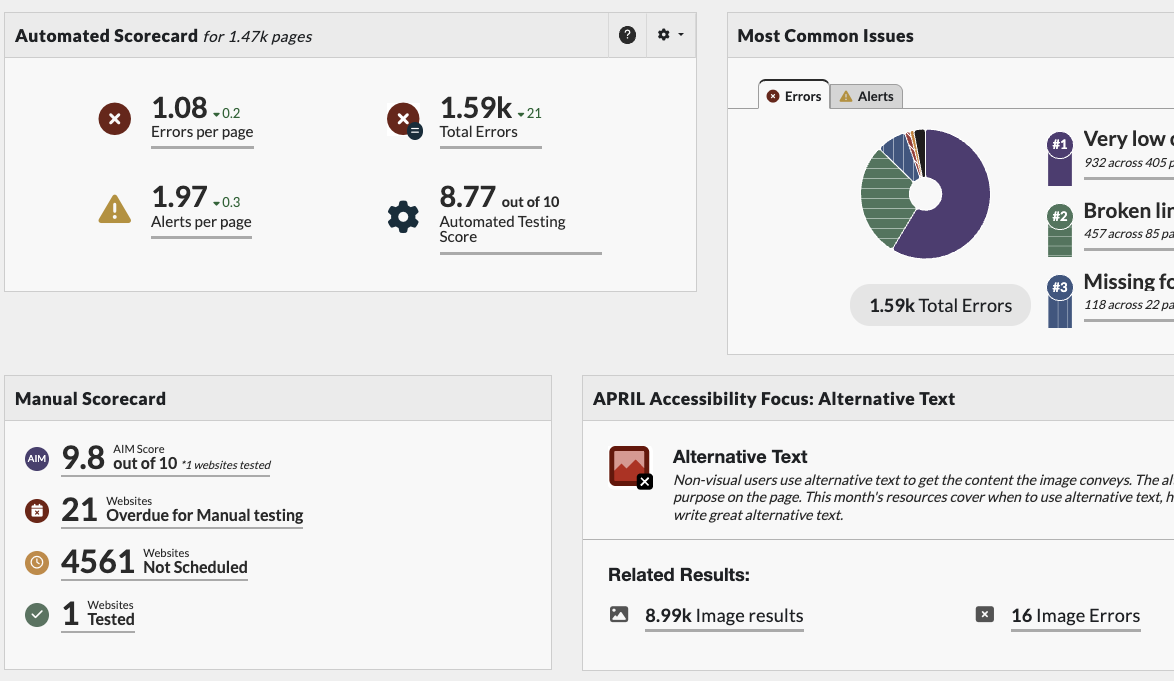
A plan only lasts if people can see progress. Pope Tech gives your whole team a shared view of where you are and what to do next.
- Scan at scale. Find automatically detectable issues across every page, not one page at a time.
- Schedule it. Run scans on a regular cadence and send reports to the people who need them.
- Track manual testing. See which sites are tested, which are due, and how scores change over time.
- Focus each month. Work on one issue type at a time so improvements stick.
Automated testing is a start, not the finish
Automated tools are fast and catch many common issues. They cannot tell you on their own whether a site is truly accessible. That takes people.
The best strategies pair regular scanning with human testing. Keyboard checks, screen reader reviews, and feedback from people with disabilities all play a part.
Pope Tech helps you do both. We’ll help you find the right balance for your team, your content, and your goals.

Common questions
Where should we start?
Start with scope. Once you know what you are responsible for, fix the automatically detectable errors first. That clears the way for everything else.
Do we need an accessibility expert on staff?
It helps, but it is not required to begin. Most issues are prevented by everyday habits. Training and simple tools go a long way.
How long does it take to build a strategy?
A first version can come together quickly. Keep it simple enough to act on, then add detail as your program grows.
Can Pope Tech help us create our plan?
Yes. Our team works with organizations of every size. We’ll walk through your scope, your priorities, and a realistic place to start.
Ready to build a strategy that lasts? Let’s map it out together.